

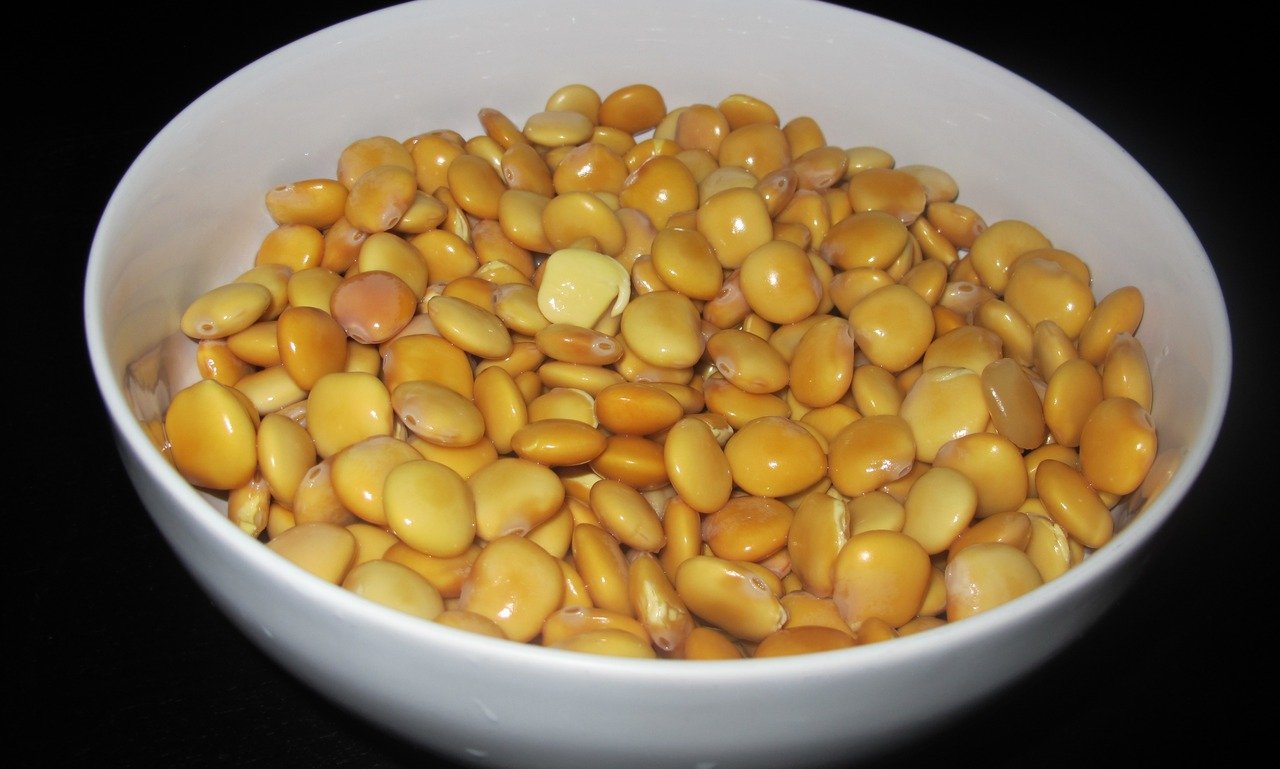
Termis beans are the yellow seeds of the lupin plant, a popular snack across Egypt, the Mediterranean and Latin America. In Egypt they are called termis (ترمس), and they are sold by street vendors and in markets, especially during the Sham El-Nessim festival. They are also known as lupini beans, lupin beans and Easter beans. Termis beans are rich in protein and fibre, low in carbohydrates and fat, and they make a filling snack once they have been soaked and boiled to remove their natural bitterness. This guide explains what termis beans are, their nutrition and health benefits, how to prepare them, and who should avoid them.
What Are Termis Beans?
Termis beans are the seeds of plants in the Lupinus genus, a member of the legume family, the same family as chickpeas, lentils and peanuts. The beans are pale yellow, round and flat, with a small hole at one end. They have a nutty, buttery flavour, similar to chickpeas or fava beans, but with a firmer texture and much less starch.
There are three main types of termis beans:
- Lupinus albus, the white lupin, grown around the Mediterranean basin and in North Africa. This is the type sold as termis in Egypt.
- Lupinus mutabilis, the Andean lupin, grown in Latin America.
- Lupinus hirsutus, the blue lupin, grown in parts of Europe.
People have eaten termis beans for thousands of years. They were a common food in ancient Egypt and Rome, and they are still eaten today as a pickled snack in Portugal, Spain, France, Italy, Greece and Egypt. In Egypt, termis beans are a beloved street snack: vendors sell them warm in paper cones, seasoned with salt, lemon and cumin. They are also eaten during the Sham El-Nessim festival, the spring holiday that marks the start of the season.
Termis beans are also becoming popular as a plant-based protein. Lupin flour, made from ground termis beans, is used in low-carbohydrate baking, and the beans themselves are sold as a high-protein snack in health food shops. Only a small share of the world’s lupin crop is eaten by people today, most of it goes to animal feed, but demand for human food is growing as more people look for protein that does not come from meat or soy.
Termis Beans Nutrition
Termis beans are one of the most nutritious legumes. One cup of cooked termis beans (about 166 grams) contains about 198 calories, 26 grams of protein, 6 grams of fat and only 11.4 grams of net carbohydrates, with 4.6 grams of dietary fibre. That is almost twice the protein of chickpeas or black beans, for far fewer carbohydrates.
| Nutrient (per 100 g, raw) | Amount |
|---|---|
| Energy | 370 kcal |
| Protein | 36.2 g |
| Carbohydrates | 40.4 g |
| Fat | 9.74 g |
| Fibre | About 19 g |
| Folate (vitamin B9) | 89% of daily value |
| Manganese | 113% of daily value |
| Thiamine (vitamin B1) | 53% of daily value |
Termis beans are also a good source of iron, magnesium, phosphorus, potassium, zinc and B vitamins, including B1, B2, B3 and B6, as well as vitamin C. They are naturally free of cholesterol and saturated fat. Their thick seed coat is about 25 percent of the bean and consists mostly of insoluble fibre, which is why the beans are so filling.
Health Benefits of Termis Beans
High in protein. A cup of termis beans provides 26 grams of plant protein, more than most other beans and close to the amount in a serving of meat. Protein is essential for building and repairing muscle, and the body cannot store it, so it must come from food every day. Termis beans contain all the essential amino acids, which makes them a complete protein source.
Low in carbohydrates. With only 11.4 grams of net carbs per cup, termis beans are one of the lowest-carbohydrate legumes. That makes them a popular choice for people following a low-carb or keto diet, and for anyone who wants a filling snack without a blood sugar spike.
Good for digestion. The fibre in termis beans supports healthy digestion and feeds the good bacteria in the gut. Lupin fibre acts as a prebiotic, which means it helps the large bowel stay healthy and regular. A cup of termis beans contains about 4.6 grams of fibre, and the raw bean is about 19 percent fibre by weight.
May support heart health. Termis beans are rich in arginine, an amino acid that helps blood vessels relax, which can help lower blood pressure. Their fibre also helps lower cholesterol and triglycerides. Together with their low fat and zero cholesterol, this makes termis beans a heart-friendly food.
May help blood sugar. The combination of high protein, high fibre and low starch slows down digestion, which keeps blood sugar steadier after eating. Studies on lupin have linked it to better blood sugar control, which is useful for people managing diabetes or trying to avoid energy crashes.
May help with weight loss. Protein and fibre are the two nutrients that keep you full the longest, and termis beans are rich in both. A small bowl of termis beans can keep hunger away for hours, which makes it easier to eat less overall. They are also low in calories for how filling they are, at about 198 calories per cup.
How to Prepare Termis Beans
Termis beans need proper preparation before they are safe to eat. The bitter variety is high in alkaloids, natural compounds that are extremely bitter and can be toxic if the beans are eaten without soaking and rinsing. Even the sweeter modern varieties should be soaked, boiled and rinsed.
From dried beans:
- Rinse the dried beans and pick out any damaged ones.
- Soak them in plenty of cold water overnight, for 12 to 24 hours.
- Drain the water, then boil the beans in fresh water for 45 to 60 minutes, until they are tender but still firm.
- Drain again, then soak the beans in fresh cold water for 3 to 5 days, changing the water twice a day. This washes out the bitter alkaloids.
- Taste a bean before eating. If it is still bitter, keep soaking and changing the water. Do not eat beans that are still bitter; if you are only testing, chew and spit it out.
From a jar or can. Jarred termis beans are already soaked, boiled and brined, so they are ready to eat. Drain and rinse them, then season with salt, lemon juice and cumin, or use them straight from the jar as a snack.
Storing them. Prepared termis beans keep in the fridge for up to a week in their brine or in fresh water. They also freeze well for several months.
How to Eat Termis Beans
The simplest way to eat termis beans is as a snack. In Egypt they are served warm with salt, lemon and cumin, eaten one at a time by squeezing the bean out of its skin. Some people eat the skin too, which adds fibre, while others peel it off.
Termis beans are also easy to use in cooking:
- In salads. Add a handful of jarred termis beans to a green salad, a tomato salad or a grain salad for protein and crunch.
- As a snack mix. Toss them with olive oil, garlic, chilli flakes and herbs, then roast them in the oven for a crunchy snack.
- In dips. Blend them with tahini, lemon and garlic for a hummus-style dip.
- As flour. Lupin flour, made from ground termis beans, can replace part of the wheat flour in bread, pancakes and pasta, adding protein and cutting carbohydrates.
Termis Beans vs Chickpeas
Termis beans and chickpeas are often compared because they look and taste similar, but their nutrition is quite different.
| Per 1 cup cooked | Termis beans | Chickpeas |
|---|---|---|
| Calories | About 198 | About 269 |
| Protein | 26 g | 15 g |
| Net carbohydrates | 11.4 g | 35 g |
| Fibre | 4.6 g | 12.5 g |
| Fat | 6 g | 4 g |
Termis beans win on protein and carbohydrates, while chickpeas win on fibre. Chickpeas are also much easier to prepare, since they need only an overnight soak and a short boil, while termis beans need several days of soaking and rinsing. Chickpeas are softer and fluffier; termis beans are firmer and nuttier.
Side Effects and Who Should Avoid Termis Beans
Termis beans are safe for most people when they are prepared properly, but there are two things to know.
Alkaloids and bitterness. The bitter compounds in raw termis beans can cause lupin poisoning, a nervous syndrome, if the beans are eaten without proper soaking and rinsing. This is why the preparation process matters so much. Never eat dried termis beans raw, and never eat prepared beans that still taste bitter.
Allergy. Termis beans belong to the same plant family as peanuts, and the food authorities note that people with a peanut allergy may also react to lupin. Lupin is a recognised allergen in the European Union, and food labels must list it. Anyone with a peanut or legume allergy should avoid termis beans or ask a doctor first. Symptoms of a lupin allergy can include itching, swelling, stomach pain and difficulty breathing.
Where to Buy Termis Beans
Termis beans are sold dried, jarred or canned. In Egypt and the Mediterranean they are available in any market or supermarket. Elsewhere, look for them in Middle Eastern, Mediterranean or Latin American grocery shops, in health food shops, or online. Jarred termis beans are the easiest option for a first try, since they are ready to eat. Dried beans are cheaper and keep for months in the cupboard, but they need the full soaking and rinsing process.
FAQs
What are termis beans? Termis beans are the yellow seeds of the lupin plant, also called lupini beans or lupin beans. In Egypt they are known as termis, and they are eaten as a salty snack, especially during the Sham El-Nessim festival.
Are termis beans the same as lupini beans? Yes. Termis is the Egyptian Arabic name for lupini beans. They are the same bean, sold under different names in different countries.
Are termis beans healthy? Yes. They are high in protein and fibre, low in carbohydrates and fat, and rich in iron, magnesium, folate and B vitamins. One cup provides 26 grams of protein for about 198 calories.
How do you eat termis beans? Eat them as a snack with salt, lemon and cumin, or add them to salads, dips and roasted snack mixes. Jarred termis beans are ready to eat; dried ones must be soaked overnight, boiled and rinsed for several days first.
Can you eat termis beans raw? No. Raw termis beans contain bitter alkaloids that can be toxic. They must be soaked, boiled and rinsed until the bitterness is gone before eating.
Are termis beans good for weight loss? They can help. Their high protein and fibre keep you full for a long time, and they are low in calories and carbohydrates for how filling they are.
Who should not eat termis beans? People with a peanut allergy should avoid them, because lupin is in the same plant family and can cause a similar reaction. Anyone who is unsure should ask a doctor first.
Where can I buy termis beans? In Middle Eastern, Mediterranean or Latin American grocery shops, in health food shops, or online. They are sold dried, jarred or canned.
Final Thoughts
Termis beans are an old food that deserves more attention. They have been eaten in Egypt and the Mediterranean for thousands of years, and they are one of the most nutritious legumes you can eat: 26 grams of protein per cup, very few carbohydrates, and a good supply of fibre, iron and folate. They need more preparation than chickpeas, and people with a peanut allergy should avoid them, but for everyone else they are a filling, healthy snack that has stood the test of time. If you have never tried termis beans, start with a jar, season them with salt, lemon and cumin, and see why Egyptians have loved them for centuries.