

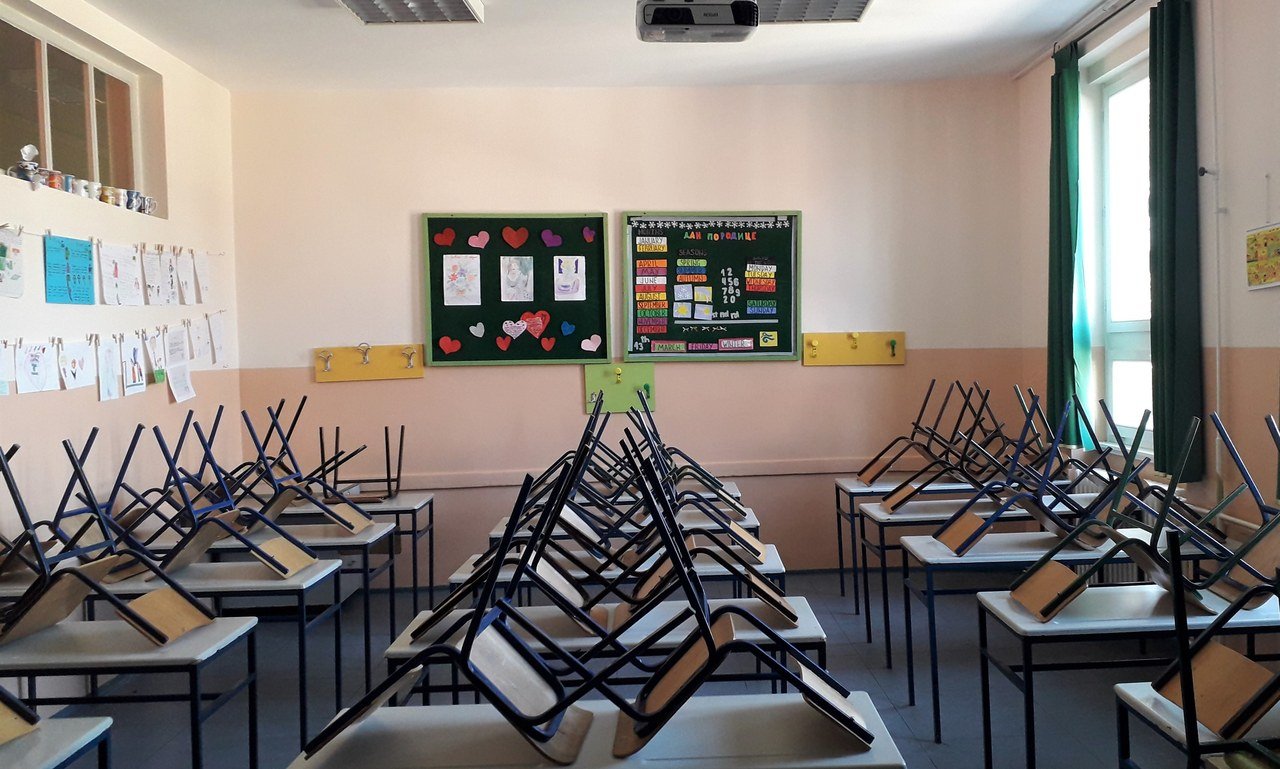
Osnovno uciliste is a term that many people meet when they read about schools in Croatia, Serbia, or Bosnia and Herzegovina. It sounds formal in English, yet the idea behind it is simple. An osnovno uciliste is a primary school, the first stage of compulsory education for children.
The phrase describes a school where children learn reading, writing, and arithmetic. It is not a university, a college, or a specialist academy. It is the ordinary school that almost every child attends for eight years.
This guide explains what osnovno uciliste means and how it works. It focuses mainly on Croatia and Serbia, where the eight-year pattern is clear. Bosnia and Herzegovina is mentioned too, but its system is less uniform, so that difference is stated plainly below.
What Osnovno Uciliste Means
The words themselves give a useful clue to the meaning of osnovno uciliste. In Croatian, Serbian, and Bosnian, osnovno means basic or elementary. Uciliste means a school or an educational institution. Put together, osnovno uciliste means a basic school.
In everyday use, that basic school is a primary school or an elementary school. It is the school for young children, not for teenagers in secondary education and not for adults in higher education. The term points to the foundation stage of schooling.
An osnovno uciliste therefore covers the first years of formal learning. Children arrive as beginners, often at the age of six or seven. They leave as young teenagers, ready for the next stage of education.
Osnovno Uciliste and Osnovna Skola
Anyone researching schools in Croatia will soon meet another term: osnovna skola. This is the standard everyday term for a primary school in Croatia. It is the name that appears on school buildings and in most guides for parents.
Osnovno uciliste and osnovna skola point to the same kind of school. The first phrase is more formal and more general. The second phrase is the common Croatian name for the institution itself. A parent in Zagreb is more likely to say osnovna skola when talking about the local school.
How Long Osnovno Uciliste Lasts
An osnovno uciliste lasts for eight years. That eight-year span is the core fact about the system in Croatia and in Serbia. It covers grades 1 to 8, and it is compulsory and free in public schools.
Children in Croatia usually start at the age of six or seven. They finish at the age of 14 or 15. Some sources give the compulsory age range as 6 to 14, while others give it as 6 to 15. The difference comes from birthdays and the exact date a school year ends.
In Serbia, the entry rule is described in a slightly different way. Children who are at least six and a half, and no more than seven and a half, at the start of the school year are enrolled in the first grade. The obligation to attend then continues until the end of the school year in which a pupil turns 15.
Bosnia and Herzegovina needs a careful note here. Some sources list nine grades of compulsory schooling in Bosnia and Herzegovina, rather than eight. The system there is organised differently in different areas, so a single eight-year description does not fit the whole country.
The Lower Phase of Osnovno Uciliste: Grades 1 to 4
The eight years of an osnovno uciliste are divided into two phases. The first phase is the lower phase, covering grades 1 to 4. It is sometimes called class-based teaching, because one class teacher leads the class.
In this phase, pupils usually stay in the same classroom for four years. They have one main teacher who teaches most subjects. Foreign languages and religion are common exceptions, and they may be taught by other teachers.
The focus in grades 1 to 4 is on the foundations. Pupils learn to read and write in their own language. They learn basic arithmetic and how to use numbers in everyday situations. They also learn about nature and society, and they begin to develop habits for study and working with others.
The subjects in the lower phase are broad rather than specialised. They include the national language, mathematics, nature and society, visual art, music, and physical education. A first foreign language is also taught, often English, and it is usually introduced in the first grade.
The Upper Phase of Osnovno Uciliste: Grades 5 to 8
The second phase of an osnovno uciliste covers grades 5 to 8. It is sometimes called subject-based teaching, because different teachers teach different subjects. This is the biggest change in a pupil’s school life so far.
From the fifth grade, pupils no longer stay in one classroom all day. They move around the school to reach the rooms for each subject. They meet a mathematics teacher, a history teacher, a science teacher, and others, instead of learning almost everything from one person.
The subjects become more specialised in this phase. History and geography are added as separate subjects. Biology, chemistry, and physics appear, with biology, chemistry, and physics added in the seventh grade in Croatia according to some guides. Informatics, technical education, and a second foreign language are also introduced.
The second foreign language is often German, French, or Italian. English remains the most common first foreign language. Pupils may also choose ethics instead of religious education, and religious education itself is an elective subject in Croatia.
The upper phase prepares pupils for secondary school. The work becomes more demanding, and pupils are expected to manage homework, tests, and timetables for several subjects. They learn to organise notes and to take more responsibility for their own learning.
Subjects Taught at Osnovno Uciliste
The curriculum of an osnovno uciliste is set at a national level. In Croatia, the Ministry of Science, Education and Youth sets the curriculum and the standards for schools across the country. That national control is meant to give pupils a similar education, whether they live in a large city or a small town.
Across the eight years, the core subjects stay recognisable. Croatian language and mathematics run through the whole period. A first foreign language, usually English, also runs through the whole period. Art, music, and physical education are part of the programme too.
In the upper grades, that broad subject splits into separate disciplines: biology looks at living things, chemistry looks at materials and how they change, physics looks at forces and energy, history looks at the past, and geography looks at places and people.
Grading and Assessment at Osnovno Uciliste
Croatia uses a numerical grading scale from 1 to 5 in primary school. The scale is simple to state, but it can confuse visitors who are used to letters or percentages. The number 5 is the best grade, and the number 1 is the only failing grade.
The scale is 5 for excellent, 4 for very good, 3 for good, 2 for sufficient, and 1 for insufficient. A grade of 2 is the lowest passing grade. A grade of 1 means the pupil has not met the standard for that subject and must improve it.
Teachers assess pupils through oral exams, written tests, class work, and participation. The final grade for a subject reflects performance across the year, not a single test. In the first four years, grades are given with a written explanation, so that parents can understand what the number means.
A grade point average is calculated as the mean of all numerical grades, with 4.50 to 5.00 as excellent, 3.50 to 4.49 as very good, 2.50 to 3.49 as good, 1.50 to 2.49 as sufficient, and 1.00 to 1.49 as insufficient. These bands are used in Croatia for primary and secondary schools.
National exams have also been introduced in Croatia in recent years. A national exam for year 8 pupils was introduced in 2022, and the exams were extended to year 4 pupils in 2024. Reports say that, as of 2024, these exams did not affect grade averages or entry to secondary school.
The School Year and Daily Life at Osnovno Uciliste
The school year in Croatia runs from early September to mid-June. For the 2026 to 2027 school year, classes began on 7 September 2026 and were set to end on 15 June 2027. The year is divided into two semesters, with the first running from September to December and the second from January to June.
There are breaks during the year. A winter break covers Christmas and New Year, a spring break falls around Easter, and a summer break runs from mid-June to early September. The exact dates are set each year by the Ministry of Science, Education and Youth, so families should check the current calendar.
Lessons are 45 minutes long. Pupils attend school from Monday to Friday. The school day includes several lessons, with short breaks between them, and a longer break during the day. The number of lessons varies by grade and by day.
Many Croatian schools use e-Dnevnik, the national electronic class register. It is provided by CARNET and the Ministry of Science, Education and Youth. Teachers use it to record grades, attendance, and timetables. Pupils and parents can view grades and schedules through the system.
What Happens After Osnovno Uciliste
After finishing an osnovno uciliste, pupils move on to secondary school. In Croatia, secondary school is known as srednja skola. It is not compulsory in the same way as primary school, but it is attended by the large majority of pupils.
Secondary schools are divided by curriculum into grammar schools, vocational schools, and art schools. Grammar schools, known as gimnazija, prepare pupils for university. Vocational schools prepare pupils for a trade or profession. Art schools focus on music, dance, or visual art.
Entry to secondary school depends on grades from primary school. Pupils apply through an online enrolment system, and places at popular schools are competitive. That is why results in grades 5 to 8, and especially in grade 8, carry so much weight for families.
Secondary education usually lasts three or four years, depending on the type of school. Pupils who finish a four-year secondary school can take the state leaving examination, known as the state matura. That examination is used for entry to university in Croatia.
The eight years of an osnovno uciliste are therefore not an end in themselves. They are a foundation. They give pupils the literacy, numeracy, science, language, and social skills that secondary school will build on.
Osnovno Uciliste Is Not a Public Open University
The most common confusion around the term osnovno uciliste comes from a similar Croatian name: pucko otvoreno uciliste. The English translation is public open university. The shared word uciliste makes the two phrases look related, but they describe very different institutions.
A pucko otvoreno uciliste is an adult education institution. It offers lifelong learning, vocational training, language courses, and cultural programmes for adults. It is not a school for children aged six to 14. Its pupils are adults, including people who want to retrain or to learn a new skill.
The Public Open University Zagreb is the largest adult education and cultural institution of this kind in Croatia. It was founded in 1907, and it offers programmes in adult education, vocational training, and lifelong learning.
Other towns have their own public open universities. The Public Open University in Cakovec, for example, describes itself as an adult education institution and a lifelong learning centre. It offers adult education, vocational training, and language courses. Its target learners are adults, not children in compulsory schooling.
Related Posts
- Emma Chamberlain Net Worth 2026: How a YouTube Star Built $30 Million
- Charli D’Amelio Net Worth Explained: TikTok, TV and Broadway
- Mark Rober Net Worth: YouTube Career, and Rise to Fame
- Alex Cooper Net Worth Explained: Podcasts, Deals and Unwell
- Andrew Schulz Net Worth: Comedy, Career, and Rise to Fame